There are some jobs you leave.
And then there are some jobs that never fully leave you.
Before I was an author full-time, before publishing became my world, before I built the creative life I have now, I was a 911 dispatcher. And even now, all these years later, that job is still part of me in ways I do not think will ever fully fade.
Leaving dispatch was one of the hardest things I have ever done.
That may sound strange to people who have never worked a job that asks for everything you have while quietly taking pieces of you in return. But that is what it felt like for me. I was miserable by the end. The stress had sunk into my body. I was having panic attacks. My creativity felt like it was being eaten alive. I was exhausted in ways sleep never really fixed. And even when I was not at work, I was never entirely free of it.
Dispatch changes you.
It teaches you how to stay calm while someone else is falling apart. It teaches you how to think quickly, how to prioritize under pressure, how to be the voice in the dark when someone is living through the worst moment of their life. It pushes you beyond what you think you can carry. It demands composure, control, precision, empathy, and endurance all at once.
And it also costs.
Seventeen years later, there are still calls I hear every single day.
Not literally, of course. But memory does not care much about the difference. Some calls never leave your nervous system. They become part of the background noise of your life. They live in the spaces between thoughts. They come back at strange times. They remind you that some versions of yourself were built in fire, and some of that smoke never quite clears.
Dispatch is, without question, one of the jobs that has had the single biggest impact on my life. For better and for worse.
It shaped the way I understand people.
It shaped the way I understand crisis.
It shaped the way I understand fear, grief, urgency, love, and survival.
It taught me what human beings sound like when the worst has happened.
It taught me what strength looks like.
It taught me what helplessness looks like too.
And for a long time, I did not know what to do with all of that after I left.
How do you set down a job that lived in your blood?
How do you mourn something that hurt you?
How do you make peace with a role that gave you purpose and damage in equal measure?
I do not know that I have perfect answers to any of those questions.
What I do know is that writing has given me one of the only ways back through.
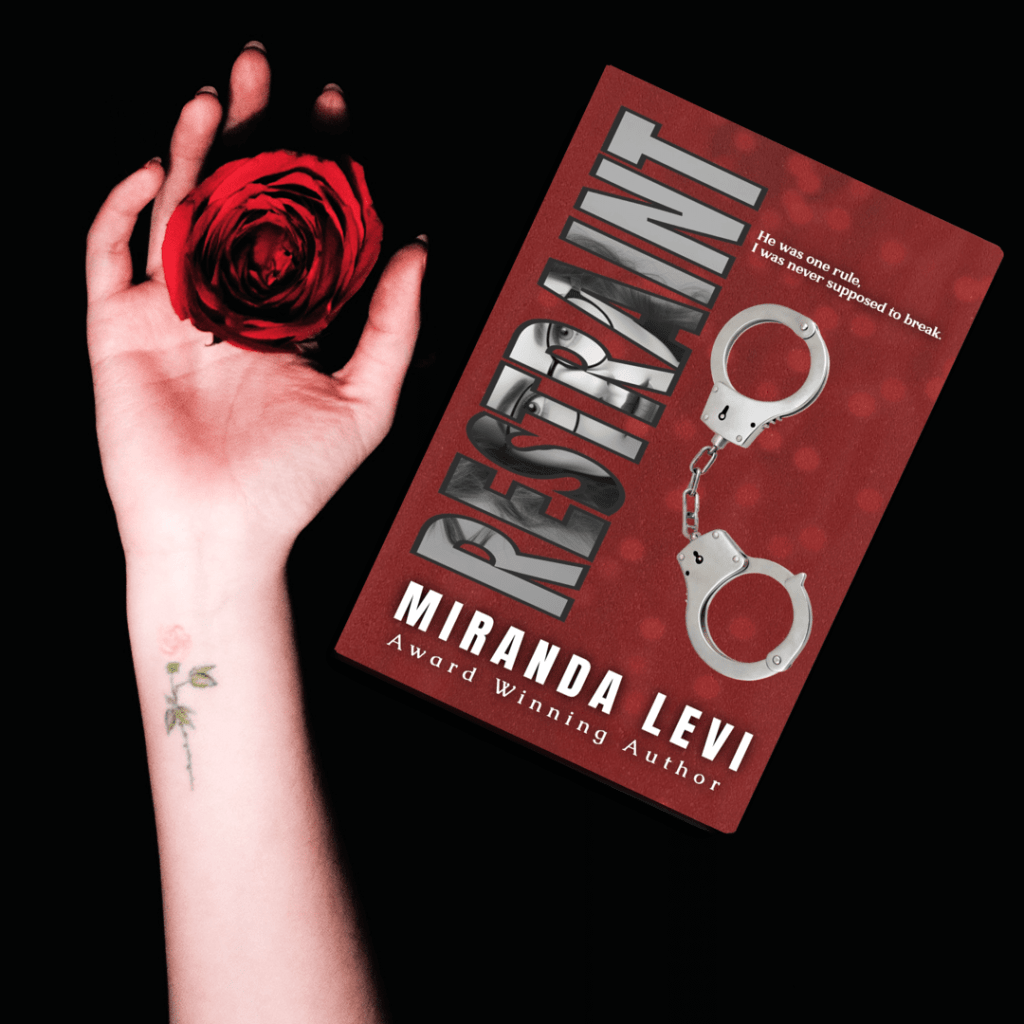
With Restraint, I got to explore some of that world again. Not in a clinical way. But in a way that let me reconnect to that part of myself with honesty, emotion, and a little more compassion than I used to be capable of.
That mattered to me more than I can probably explain.
Because writing this book was not just about telling a story. It was also about touching a part of my own life that has never really stopped aching. It was about going back to a version of me who held too much for too long. It was about letting that experience breathe on the page in a way real life never allowed.
When you work in emergency services, there is not always room to process while you are inside it. You compartmentalize. You keep going. You get through the shift. You answer the next call. You survive by function. And sometimes only much later do you realize how much of yourself you had to lock away just to keep moving.
Writing can unlock some of that.
It can let you sit with the emotional truth of something after the fact. It can let you give language to experiences that once only existed as adrenaline and silence. It can help you reclaim pieces of yourself that got buried under responsibility, trauma, and survival.
That is part of what Restraint became for me.
A story, yes. A book I am deeply proud of, absolutely. But also, in some ways, a bridge. A bridge between who I was then and who I am now. Between the woman on the headset and the woman at the keyboard. A bridge between the parts of that job I still carry with gratitude and the parts I am still learning how to grieve.
I think sometimes people assume that leaving a hard thing means being done with it. But that has not been my experience. Sometimes the hardest jobs become part of your internal architecture. They shape the rooms inside you. They change your instincts. They change your body. They change your art.
Dispatch changed my life.
It challenged me in ways I never imagined possible. It showed me the best and worst of humanity. It gave me strengths I still rely on. It also left marks I still live with.
Both things are true.
And maybe that is why writing Restraint felt so important. It gave me a way to honor that truth without flattening it. Without pretending it was all noble or all terrible. Without forcing it into a cleaner narrative than it deserves.
Some experiences are like that. They are complicated. Heavy. Defining. Painful. Transformative. They hurt you and shape you. They break something open and leave something behind.
This book let me explore that complexity.
It let me return, not because I wanted to relive it, but because I wanted to understand what it left in me.
And maybe that is one of the quiet gifts of storytelling. Sometimes it gives us a place to put the things that never really left.
If Restraint carries any extra weight for me, that is why.
It is more than a new release. It is more than a story I wanted to tell. It is also a way of reaching back toward one of the most difficult, impactful chapters of my life and saying: I see what this did to me. I see what it gave me too.
 Miranda Levi
Leave a comment